Table Of Content
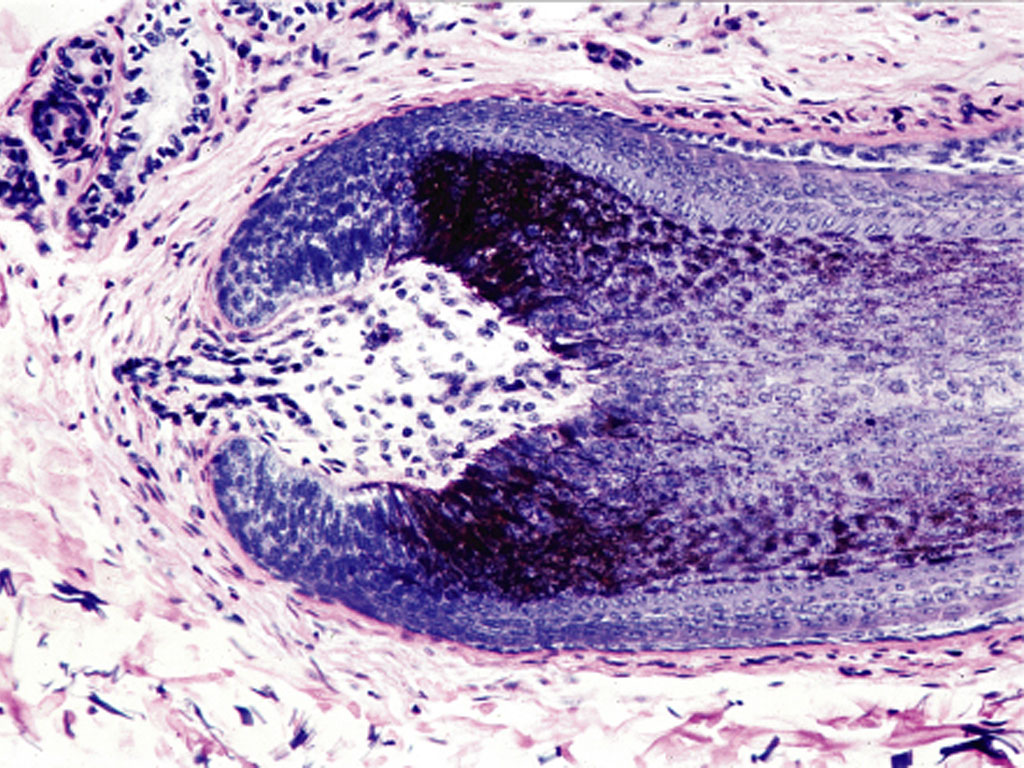
In addition, the limitations and future of functional HF regeneration are summarized. Cell-based transplantation without biomaterials is a minimally invasive approach to in vivo HF regeneration. Current cell transplantation mainly involves the transplantation of stem cells or a mixture of epidermal and dermal components. The infundibulum segment is the upper portion of the follicle.
In vivo strategies for functional regeneration of HFs
The color of your hair follicle doesn’t relate to the color of your hair. Whether it is straight or curly will depend on the cross-sectional shape of hair. The more oval-shaped the cross-section is, the curlier the hair will be. An acute case is fairly common, lasts less than six months and in 95% of the cases it goes away.
Organoid technology and HF replacement
16 Best Hair Growth Shampoos, Tested & Reviewed by Experts 2024 - ELLE
16 Best Hair Growth Shampoos, Tested & Reviewed by Experts 2024.
Posted: Fri, 19 Apr 2024 07:00:00 GMT [source]
Rats (3), mice (4), guinea pigs (5), rabbits (6), and dogs (7) are animal models for studying human hair follicles. Comparative studies on the impact of diacylglycerol O-acyltransferase 1 (DGAT1) on mouse and dog alopecia suggest that mice may be an especially sensitive species (41). Figure 1 PRISMA diagram of the process of study selection and traditional meta-analysis.
Causes of Folliculitis
Some follicles are in the growth phase while others might be in the resting phase. Some of your hairs might be growing, while others are falling out. Intestinal melatonin concentrations were 400 times higher than those of the pineal gland (56), with uncertainty in the results when the effect of intestinal flora was ignored.
Excess coffee consumption can lead to hair loss - myth or fact? - The Indian Express
Excess coffee consumption can lead to hair loss - myth or fact?.
Posted: Fri, 26 Apr 2024 09:45:23 GMT [source]
A 2017 article found a new method of reactivating dead or damaged hair follicles. However, this treatment hasn’t yet been tested on humans and it hasn’t been approved by the Food and Drug Administration (FDA). A number of hair conditions are caused by issues with hair follicles.
What are common causes of hair loss?
These cells create a tube-like structure to hold your hair. Because hairs continue to enter the resting phase and then fall out, we are constantly losing hair. A healthy adult may lose about 70 to 100 hairs on their head per day.
Will folliculitis come back?
Current techniques could make it possible to obtain potential cells in vitro (Fig. 1b), such as DPCs (Fig. 1c), SKPs, keratinocytes and other stem cells (Fig. 2), providing us with a series of cell sources. In addition, the optimization of the culture system also contributes to preserving the HF-inducive ability of potential cells. Here, we will review the potential cell sources and tissue engineering techniques that contribute to HF regeneration.
Sebaceous glands near the hair follicles produce oil, which nourishes the hair and skin. A traditional meta-analysis was used to analyze hair follicle and litter size data. Specifically, primary and secondary hair follicle densities, cashmere yield, cashmere fiber length, and litter size were treated as continuous data. Using Review Manager (version 5.4), the meta-analysis was performed according to the random model. Java (version 1.8.0) was used to perform the trial sequential analysis (TSA) on the above data.
Types of folliculitis

Also, the bulge contains several epidermal stem cells that are part of the outer root sheath and stain with CK19, CK15, and CD200. Finally, the inferior segment of the hair follicle extends from the bulge to the base of the follicle. This segment includes the bulb, which contains the follicular matrix surrounding the sides and top of the dermal papilla. The papilla interacts with the matrix, which has the highest mitotic rate of any organ.
They are not only free from ethical issues but also able to be propagated as autologous cells, which can avoid the complication of immune rejection. Thus, reprogramming of iPSCs into potential cells could be an approach to providing cell sources for HF regeneration. Lineage reprogramming is direct cellular reprogramming, which means that targeted cells could bypass the stem cell stage and convert directly to potential cells. Anagen is the active growth phase of hair follicles[17] during which the root of the hair is dividing rapidly, adding to the hair shaft. Scalp hair stays in this active phase of growth for 2–7 years; this period is genetically determined. At the end of the anagen phase an unknown signal causes the follicle to go into the catagen phase.
The bulb holds several types of stem cells that divide every 23 to 72 hours, faster than any other cells in the body. The bulb also contains hormones that affect hair growth and structure during different stages of life, such as during puberty and during pregnancy. The structure of hair follicles is simple and straightforward, but its functions and its growth cycle are quite complex. Any significant alteration to the normal growth cycle of a hair follicle may lead to a hair condition like alopecia areata or telogen effluvium.
Melatonin promotes the expression of MTNR1A (melatonin receptor 1A) in human and rex rabbit hair follicles (42, 43) and also enhances the expression of goat Wnt10b and beta-catenin (26). The signaling pathways involved in the regulation of hair follicle growth by melatonin are the PI3K/AKT signaling (43), Hippo, TGF-beta, MAPK signaling (13), and AKT/GSK3beta/beta-catenin signaling pathways (44). The results of the present study suggest that the MAPK signaling pathway is also at the forefront of KEGG enrichment. We have been focusing on the effects of the signaling pathways on reproduction (38). In addition, oral melatonin exerts a systemic effect on all cells, tissues, and organs, and it plays a key regulatory role in female reproduction (45).
Folliculitis is a common skin condition that happens when hair follicles become inflamed. At first it may look like small pimples around the tiny pockets from where each hair grows (hair follicles). New hair cells then start to multiply at the base of the “empty” hair follicle to form a new hair, and the growth phase of the hair growth cycle starts all over again. Alopecia areata is an autoimmune condition that is characterized by “round patches of hair loss on the scalp,” although it can occur elsewhere on the body, Agbai says.
There are several reasons why you might be losing your hair. According to Agbai, genetics, hormonal shifts, stress, underlying medical conditions, nutritional deficiencies, and scalp inflammation are notable factors. Research indicates that this method may serve as a safe and efficient treatment for hair loss.


No comments:
Post a Comment